Stoffige Stef
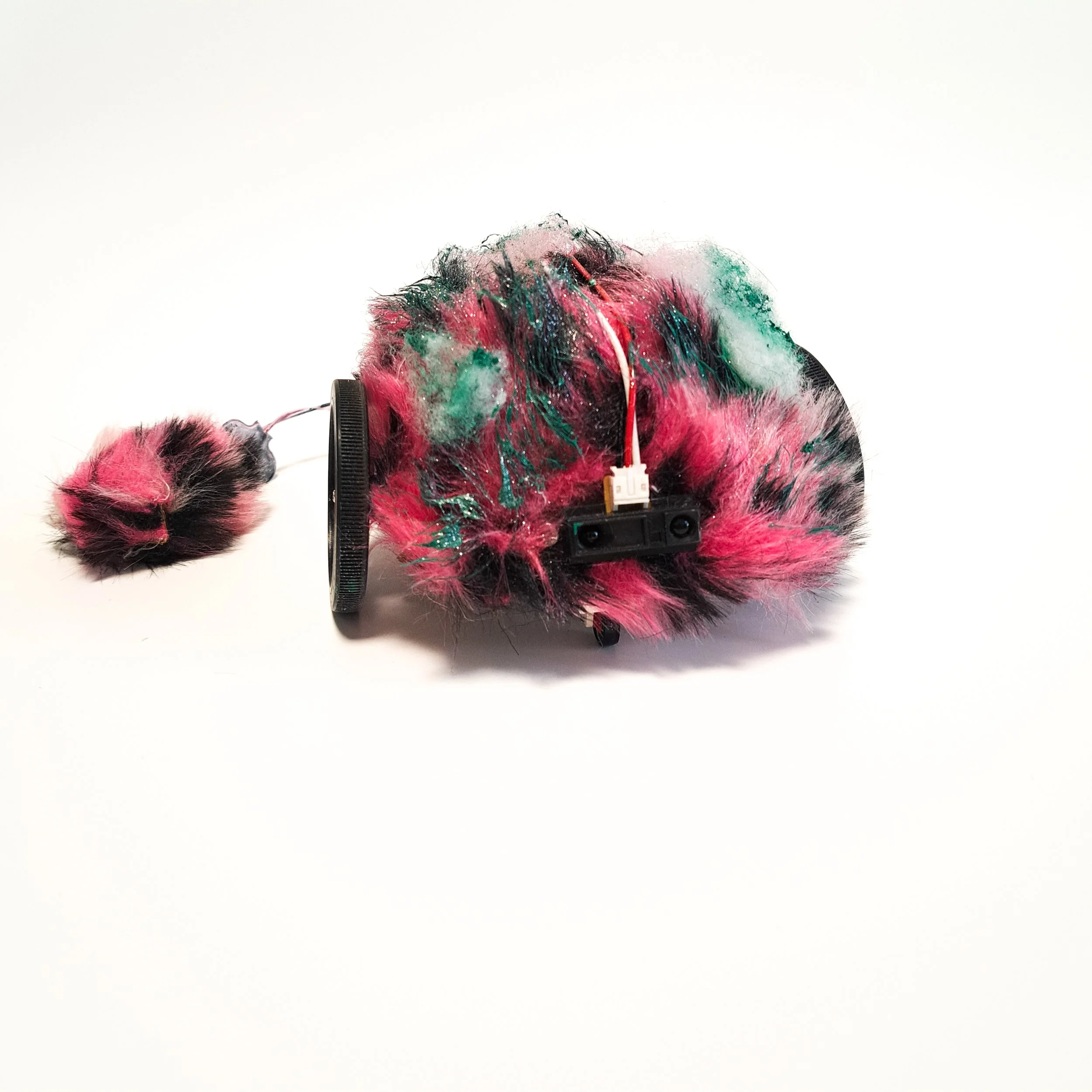
For this assignment, we had to design a robot with a distinct personality. We had to decide what the robot would look like and how it would behave, to convey a specific feeling or emotion. For example, a cheerful robot that makes people laugh, or a tired robot that is ready for the weekend. So the assignment was not only about technical design, but also about playing with atmosphere and expression.
context
Exploring Ideas

The assignment consisted of two phases. In the first week, we had to create an initial prototype using old toys. I based this robot on the Japanese Maneki-neko, also known as the beckoning cat, because I wanted to make something cute.
In the following weeks, we learned how to use Arduino. During this process, the robot developed from a cute character into a robot that craves attention.
concept
Once I knew what my robot would do, I still had to figure out why it behaved that way. I found this quite challenging, because I had never really designed a personality for an object before.
To make his behaviour feel believable, I created a backstory that explains why he craves attention.
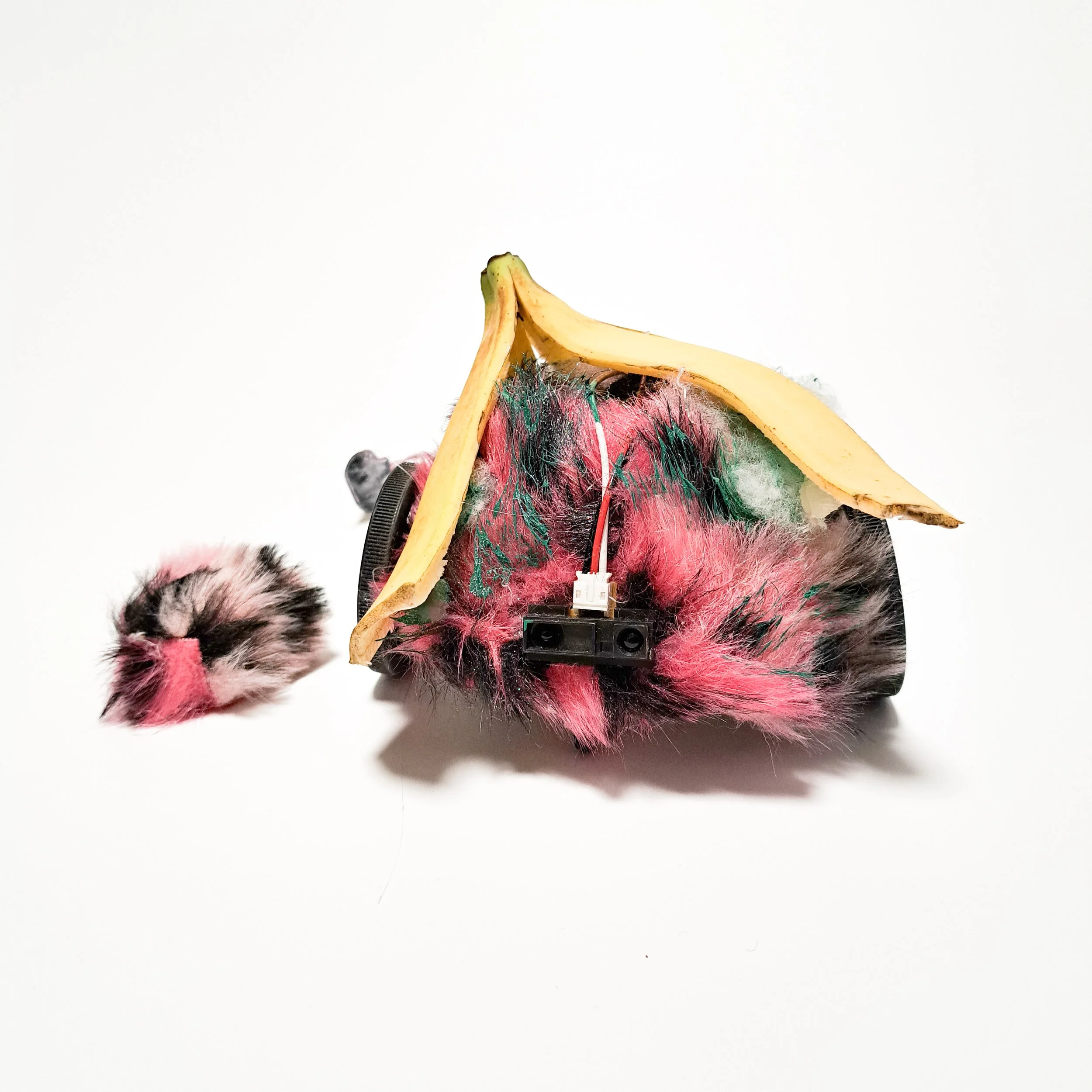
The robot’s previous owner left it behind in a trash can, where it became completely dirty. Now, it longs for attention, something it has never received before. But because it looks so filthy, that attention never comes.
Visual Design
The final result is a small, somewhat cute pink robot with mould covering its entire fur and an old banana lying on top of it. It carefully tries to push against your foot, hoping for a moment of attention or a hug. When this does not happen, it gives up disappointedly and slowly drives away.
During this module, I learned the basics of Arduino and explored personification and character design. This project also allowed me to shape my own style for the first time and bring it to life. It was an educational process in which technology and design came together.